By submitting your article for distribution in this Special Interest Group publication, you hereby
grant to ACM the following non-exclusive, perpetual, worldwide rights:
to publish in print on condition of acceptance by the editor
to digitize and post your article in the electronic version of this publication
to include the article in the ACM Digital Library and in any Digital Library related services
to allow users to make a personal copy of the article for noncommercial, educational, or
research purposes
However, as a contributing author, you retain copyright to your article and ACM will refer requests
for commercial use directly to you.
Newletter Credits
Editors: Julie M. Smith and Charles Wallace
Contributors: Calkin Suero Montero, Sebastian Dziallas, Neil Brown, Kristin Searle, Rodrigo
Duran, Sonsoles López Pernas, Elizabeth Simon, Leo Porter, Daniel Zingaro, Rajendra K. Raj,
Rahul Simha, Helen Wright, and Richard E. Ladner.
Photo credits: Uppsala University Image Bank, Wikimedia Commons, Rodrigo Duran, Karla
Covarrubias, Jodi Roe, and Bruce Hemingway.
SIGCSE Board Members
Chair - Brian Dorn, Chair, University of Nebraska at Omaha, USA
Vice-Chair - Claudia Szabo, Vice-Chair, University of Adelaide, Australia
Secretary - Mark Sherriff, Secretary, University of Virginia, USA
Treasurer - Michelle Friend, Treasurer, University of Nebraska at Omaha, USA
At Large - Oluwakemi Ola, Member At Large, University of British Columbia,
Canada
At Large - Ethel Tshukudu, Member At Large, San Jose State University, USA
At Large - Chris Gregg, Member At Large, Stanford University, USA
Immediate Past Chair - Alison Clear, Past Chair, Eastern Institute of
Technology, Auckland, New Zealand
SIGCSE News in Brief
By Julie M. Smith and Charles Wallace, Bulletin co-editors
Your focus may be on the World Cup, on staying out of inclement weather, on rapidly approaching
deadlines for conference submissions, and many other concerns. But we hope you'll take a few minutes
to stay updated on events in the computer science education research community.
We are happy to share calls for attendance at ICER and Koli Calling. We also have a report from a
workshop on generative AI and a SIGCSE special session on a new CRA survey. And we invite you to
learn more about Richard Ladner and his work on making computer science more welcoming and
accessible for disabled students.
We invite you to share brief pieces of general interest to the SIGCSE community with us for
inclusion in our next issue.
Other conferences operate in cooperation with SIGCSE and are posted on the
SIGCSE web site.
ICER 2026: Call for Attendance
By Calkin Suero Montero, Sebastian Dziallas, Neil Brown, Kristin Searle, ICER 2026 Chairs
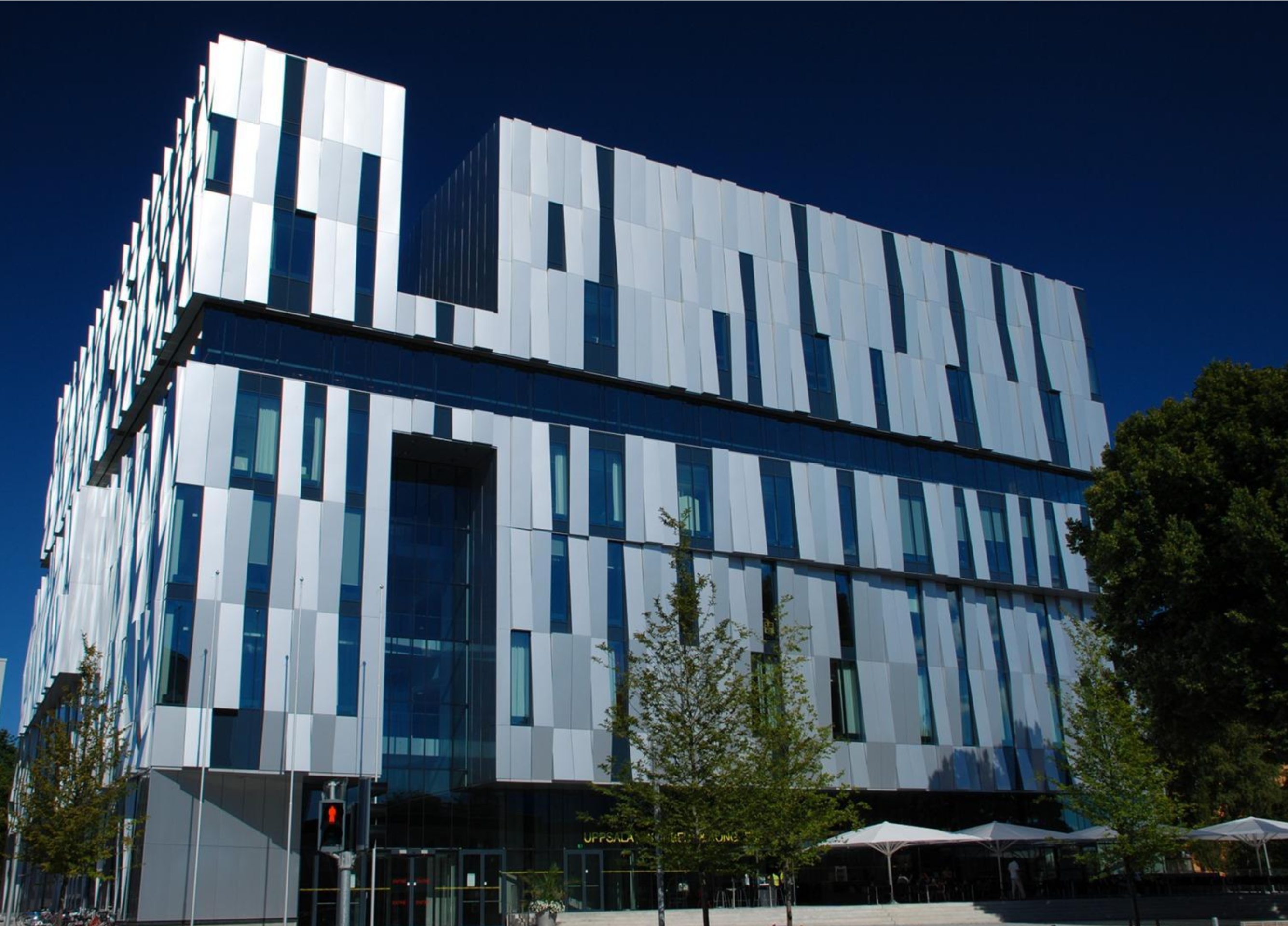
Uppsala University Main Building; photo credit: Uppsala University Image Bank
Uppsala University Main Building; photo credit: Uppsala University Image Bank
Start your August in the best possible way by joining us at the ACM International Computing
Education Research (ICER) Conference in Uppsala, Sweden! The programme begins on Tuesday, 11 August,
with the Doctoral Consortium and Works‑in‑Progress sessions held in the Uppsala University Ångström
Laboratory. All attendees are warmly invited to the opening reception on the terrace of Uppsala
Congress & Concert Hall from 17:30 to 19:30. Over light refreshments, you will have the chance to
reconnect with colleagues and make new acquaintances in a relaxed and welcoming atmosphere.
The main conference opens on Wednesday morning, 12 August, at Uppsala Congress & Concert Hall,
located right in the heart of the city. As is tradition at ICER, the programme promises a rich and
well‑balanced blend of research papers, posters, and lightning talks, offered both online and in
person, alongside opportunities to learn about the work of this year’s Doctoral Consortium
participants.
A particular highlight will be the conference dinner on Thursday evening, hosted at the historic
16th century Uppsala Castle, a short walk from the city centre and the conference venue, and a true
landmark at the heart of Uppsala, overlooking the city and an unforgettable setting for
conversation, celebration, and community.
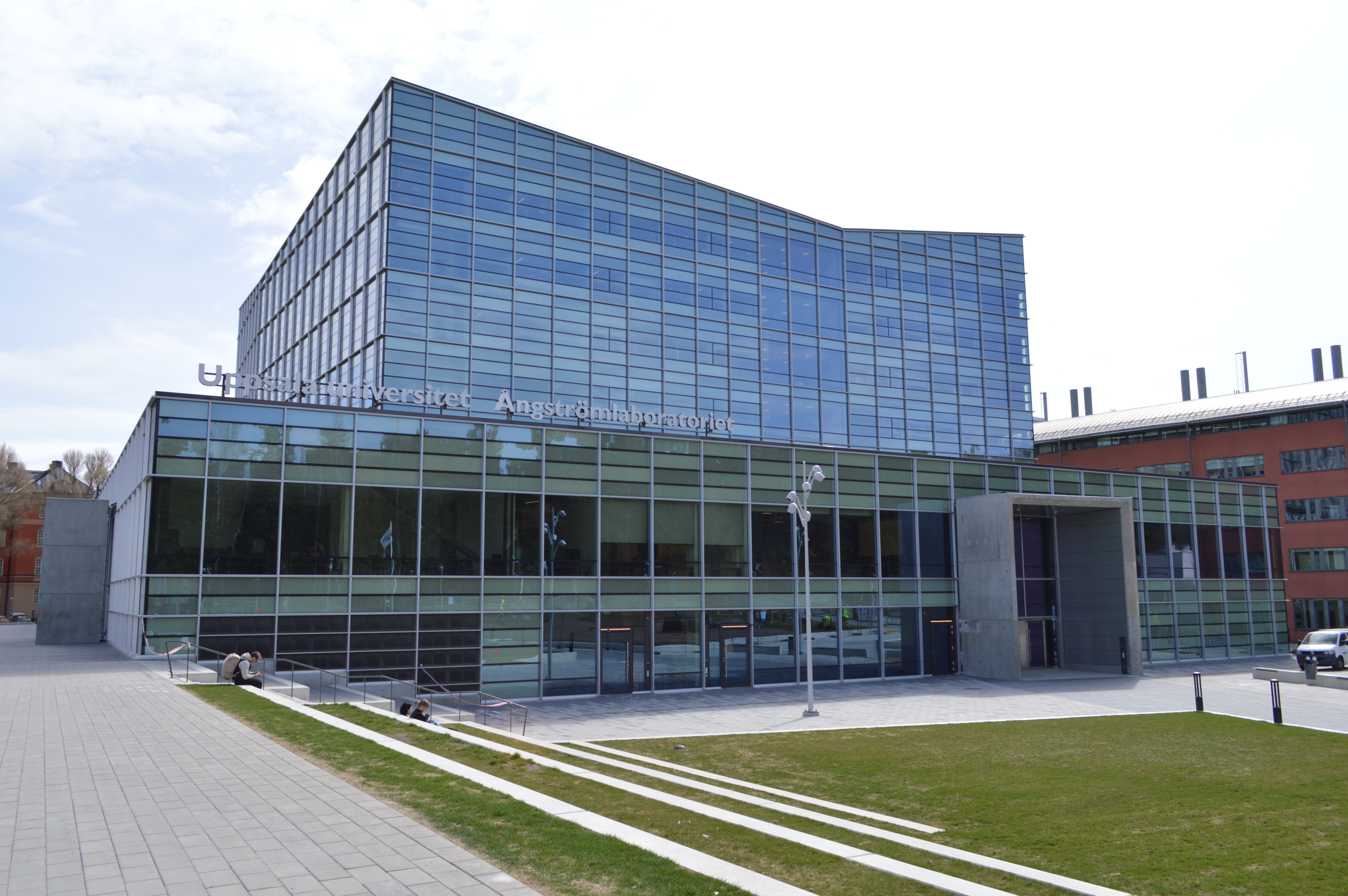
Uppsala University Ångström Laboratory; photo credit: Uppsala University Image Bank
Uppsala University Ångström Laboratory; photo credit: Uppsala University Image Bank
To support broad participation, the conference will be held in both face‑to‑face and hybrid formats.
We are planning to use Discord, or another suitable platform, for online attendees. The online
platform will include dedicated channels designed to recreate the lively table discussions that
follow each paper presentation, as well as channels to facilitate social interactions.
Registration opens in early May. To take advantage of the early‑bird rate, please be sure to
register by 5 June. Full details about registration, travel, and accommodation will be found on the
conference website. As you make your plans, we encourage you
to extend your stay. Uppsala is one of Sweden’s cultural gems, offering a wealth of local
activities, historic sites, and summertime experiences to enjoy. The Destination Uppsala
website gives an excellent overview of local events
and activities.
Uppsala City, Fyris River view; photo credit: Uppsala University Image Bank
Uppsala City, Fyris River view; photo credit: Uppsala University Image Bank
Additional information about ICER’26 can be found on the
conference website, including any updates. If you have
questions, you can email the chairs at chairs@icer.acm.org. We look forward to seeing you soon in
the heart of Sweden!
Koli Calling 2026 Call for Papers
Rodrigo Duran & Sonsoles López PernasKoli; photo credit: Rodrigo Duran
We warmly invite you to attend the 26th Koli Calling International Conference on Computing Education
Research (Koli Calling 2026), to be held 05-08 November 2026 in the beautiful Koli National Forest
in Eastern Finland. The submission deadline for full papers and discussion papers is
12 July 2026 (abstracts) and 19 July 2026 (papers).
The Koli Calling Doctoral Consortium will be organized before the conference, November 3rd – 4th, as
an in-person event at Joensuu. The conference itself will begin on November 5th. Given the recent
increase in submissions, we might have more time at Koli and could start on the morning of November
5th, or in the afternoon, as in previous years. However, we will only have the final program later
after submissions, so stay tuned!
All accepted submissions need to be presented in person at Koli Calling. At least one author has to
attend the conference in person for the paper to be included in the proceedings. The main conference
will be held at the Hotel Koli, located in a scenic national park about 60km north of Joensuu,
Finland.
Koli Calling is one of the leading international conferences dedicated to the exchange of research
and practice relevant to the scholarship of teaching and learning and to education research in the
computing disciplines. Koli Calling publishes high-quality papers that combine teaching and learning
experiences with solid, theoretically anchored research. Koli Calling is a single-track conference
for original and novel work with research, practice, and systems presentations as well as a keynote
and invited talks. The conference is known for its moderate size, intimate atmosphere, and lively
discussions
We hope that many of you will join us at Koli Calling 2026 and help us make this conference as
enjoyable and memorable as in previous years!
GenAI in CS Education Workshop (AICSEPAR) 2026 Recap
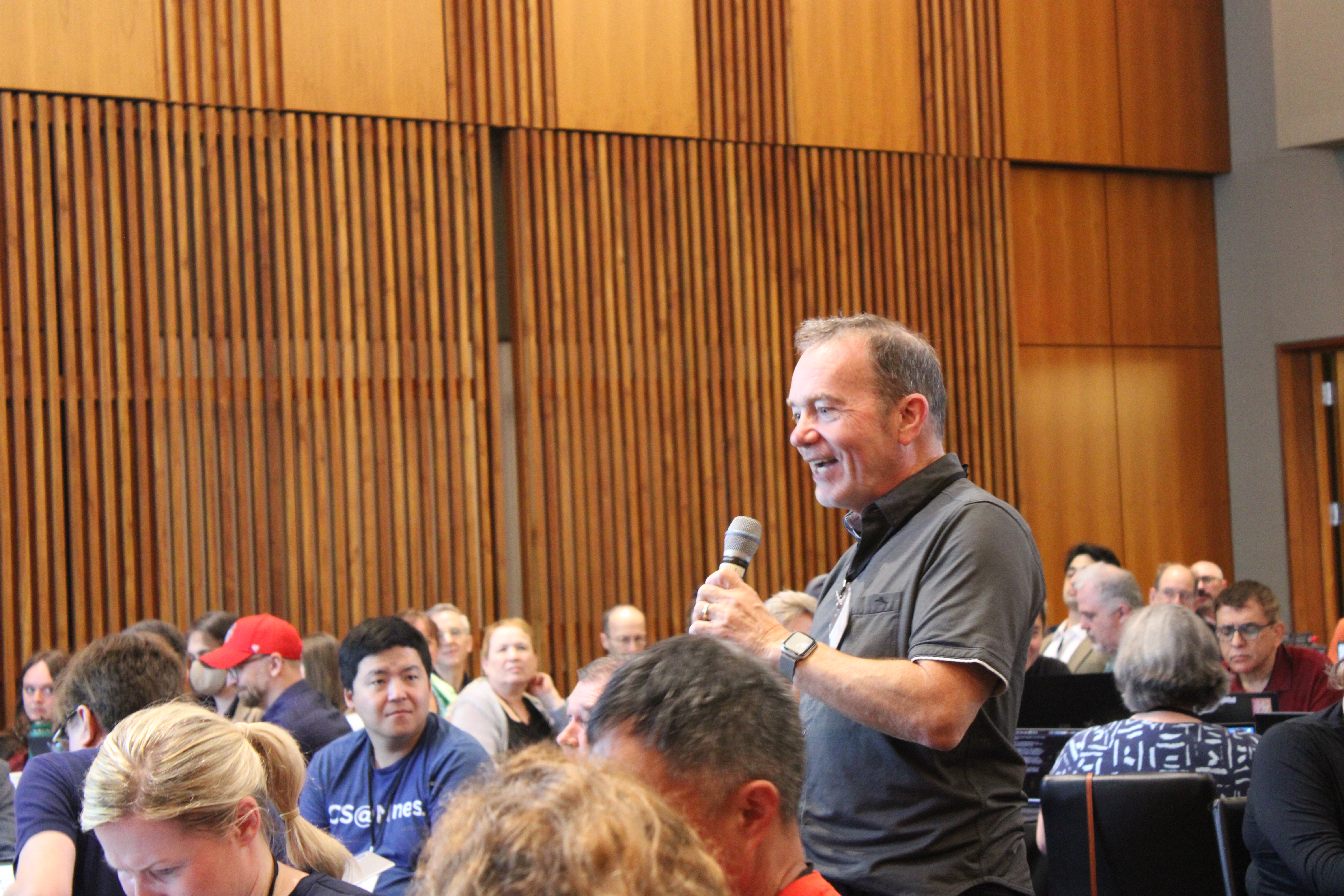
by Daniel Zingaro, Leo Porter, and Beth SimonBill Pugh speaks at the workshop; photo credit: Karla Covarrubias and Jodi Roe.
Bill Pugh speaks at the workshop; photo credit: Karla Covarrubias and Jodi Roe.
The inaugural GenAI in CS Education Workshop: Practice and Research (AICSEPAR; we need a better acronym next time!) was held March 16–17, 2026 at the Scripps Seaside Forum in the La Jolla/San Diego area. The workshop was organized by the GenAI in CS Education Consortium, directed by Leo Porter, Beth Simon, and Daniel Zingaro. We created this workshop to help the computing education community move beyond ad hoc responses to generative AI and toward shared, evidence-informed practice. We thank our industry sponsors GitHub Education, ServiceNow, and Teradata.
Our aim was to put researchers, educators, and industry professionals in the same room, to triangulate what is already changing and what should change next. The program reflected this practice-and-research blend: attendees engaged with top recent research on GenAI integration in CS education, saw practical examples of GenAI integration in courses and curricula, and heard from industry experts on how GenAI is reshaping software engineering work.
Research sessions offered a tour of teaching and learning CS in the GenAI era, including: using probeable problems at scale in CS1; what professional software developers need to succeed in an AI era (hint: they still need skills besides using AI!); GitHub Copilot’s effects on student work in brownfield coding tasks; how GenAI can erode social interactions and learning communities; using LLMs within assessments to support novices’ computational thinking; student perceptions and adoption of GenAI instruction in software engineering courses; and how student help-seeking behaviors with LLMs relates to their motivation and beliefs.
Curriculum and pedagogy sessions emphasized concise, portable ideas instructors could adapt immediately, including: a mini-course on effective use of AI coding tools; embedded and incremental teaching of GenAI skills across the curriculum; students critically assessing software artifacts in an object-oriented design course; AI-resilient program assessment via demonstrations and conversations; reimagining CS1 goals; and a new upper-division course on generative security application engineering.
We thank our two keynote speakers: R. Benjamin Shapiro (University of Washington) presented “Computing Education for Human-AI Software Engineering,” reframing computing education around human–AI collaboration; and Titus Winters (Adobe) presented “An Industry Perspective on the Role of Humans in the post-AI Software,” emphasizing our ongoing importance in design, specification, code reading, testing, and tooling.
An industry panel featuring Artur Borycki (Teradata), Magaly Drant (ServiceNow), and Cory Gwin (GitHub) connected these themes to workplace realities. That discussion generated so much interest that Gwin also hosted an informal, additional workshop after the scheduled program, sharing more detail on how rapidly GenAI is changing software engineering practices in industry.
The workshop also included a session on supporting equity in GenAI-integrated CS education (led by Tasha Frankie and Beth Simon), and an optional EngageCSEdu session on submitting a curriculum resource to the ACM Digital Library (led by Brian O’Neil).
Through attendee votes, we also recognized outstanding workshop contributions. The best research presentation award went to Paul Denny (University of Auckland) for “Probing the Unknown: Exploring Student Interactions with Probeable Problems at Scale in Introductory Programming”. The best curriculum presentation award went to Baker Franke (University of Illinois Chicago) for “What If CS1 Was Never about Writing Code?”, a call for us to reconsider what foundational computing competence should look like in an AI-native era.
The goal of the GenAI in CS Education Consortium is to support faculty and institutions in integrating GenAI in their courses and curricula in ways that enhance student skills and learning. We offer complete courses for adoption, summaries of the current research, faculty training, and community support. To learn more about AICSEPAR or the Consortium, please visit teachCSWithAI.org.
We look forward to continuing this conversation, and we hope to see many of you at a future AICSEPAR!
Summary of the CRA Practitioner-to-Professor (P2P) Survey Special Session at SIGCSE 2026
by Rajendra K. Raj, Rahul Simha, and Helen Wright
Special Session: The CRA Practitioner-to-Professor (P2P) Survey: How to use the results for
your undergraduate program?
What do computing industry professionals think of undergraduate computer science (CS) education?
What do they value the most based on their own undergraduate experience and what they see in the
graduates they hire? The Computing Research Association (CRA) has launched a new periodic
national-scale survey to address these questions with the intent of providing useful information for
academic computer science programs. Unlike broad all-major surveys, the CRA's
Practitioner-to-Professor (P2P) Survey focuses on computer science, with a level of detail
specifically aimed at providing actionable feedback for CS faculty. This special session at SIGCSE
summarized results from the 2024 P2P Survey administered in 2024, and used a workshop-like format
for attendees to reflect actively on how the P2P survey and its future incarnations could benefit
their CS programs.
Some highlights from the 2024 survey include:
Respondent Profile: A majority held CS degrees (53.5%) and worked in front-line
technical roles (64.4%), primarily in software development (76.4%).
Coursework: Respondents recommended an average of 18.3 CS courses—about four
more than they themselves actually took—reflecting broad support for "more CS" in the
curriculum. For non-CS foundations, respondents recommended 16.5 courses, prioritizing written
communication, probability/statistics, single-variable calculus, and experiential learning
(co-ops/internships).
Mathematics: 90% of respondents believe math should be required, citing its
role in training an analytical mind and its necessity for growing areas like AI and Machine
Learning. Among courses in math, Statisticsled the field, cited by 56.3% of respondents,
followed by Linear Algebra (40.3%) and Discrete Mathematics (36.7%). Both
Single-Variable Calculus and Logic each also appeared in the top-three selections
for 32.4% of the practitioner pool.
Programming Languages: Feedback converged on five core assertions: (1)
problem-solving transcends syntax; (2) mastery of a single language is vital; (3) exposure to
multiple paradigms is necessary; (4) self-directed learning of new languages is a required
competency; and (5) object-oriented proficiency remains standard.
Deep-dive into Algorithms, Databases and Architecture: The last part of the
survey contained detailed questions about sub-topics in the three deep-dive areas selected for
this year’s CRA P2P Survey. This type of feedback is likely to be the most actionable at the
course-level, allowing for individual faculty to adapt in their courses. (1) Data structures are
far and away the most important topic in Algorithms; (2) In Databases, respondents sought a
balance between theory (normal forms, indexing, relational algebra) and practice (SQL); (3)
Interestingly in Architecture, the top few sub-topics were all foundational at the lowest-level:
respondents listed digital logic subtopics as their top priorities.
The CRA invites faculty who missed the session to
learn more about how they can use the P2P results
in their programs.
And to watch out for the 2026 survey results coming this summer!
The special session also focused on suggestions for using the feedback which included: faculty
discussion, getting deans to be aware of the P2P, and using the results to show students that
fundamentals matter. In addition, participants provided ideas for the next (2026) P2P survey.
Background: The CRA P2P survey has developed out of the NSF-funded
DEAP project, based on a seminal workshop on
industry-to-academia feedback loops that featured a broad swath of industry practitioners and
faculty representing multiple universities. The 2024 P2P Survey objectives were refined through
faculty workshops focused on ensuring the data would be actionable within local institutional
contexts.
Faculty input on future P2P surveys: The CRA welcomes faculty input for future surveys. Prior to
each survey, a “what should be in the next P2P?” faculty survey is sent out to the CRA mailing list.
Alternatively, faculty can contact anyone in the P2P working group - see the P2P webpage above.
Member Spotlight: Richard E. Ladner
Richard E. Ladner is Professor Emeritus at the Paul G. Allen School of Computer Science and
Engineering at the University of WashingtonRichard E. Ladner; photo credit: Bruce Hemingway.
How did you first get involved with the CS education community?
I've been a CS educator since 1971 when I joined the Computer Science Group at the University of
Washington. At that time I didn't know about ACM SIGCSE that was formed in 1968 with its first
conference in 1970. It wasn't that I wasn't interested in CS education, but I was busy in my own
research areas in theoretical computer science. I was a regular at the theory conferences: ACM STOC,
IEEE FOCS, and ACM SODA. Over the years I became more aware of SIGCSE and its annual conference, but
I didn't contribute to it until 2008 with a special session titled "Computer science for everyone:
making your computing classes and departments accessible." This was the first of my many
involvements with the CS education community which includes CS education at levels, K-12,
undergraduate and graduate education.
Can you describe some of the ways you have been involved in developing and enhancing computer
science education?
The primary focus of my work in CS education is in making it more accessible and welcoming for
disabled students. With Sheryl Burgstahler, in 2006, I created AccessComputing which is a NSF funded
Broadening Participation in Computing Alliance. I stepped down as AccessComputing PI in 2024,
passing on the leadership to Professor Maya Cakmak. AccessComputing has the goal of increasing the
participation of people with disabilities in computing careers. This is done through direct
interventions for disabled computing students at all levels and driving institutional change to
benefit those students. Over the years AccessComputing has sponsored its own career development
workshops for students and supported students to attend such workshops and conferences such at the
CRA-WP IDEALS workshops and the Tapia Conference. One of AccessComputing's career development events
for students was the Summer Academy for Advancing Deaf and Hard of Hearing in Computing that ran for
9 weeks each summer from 2007 to 2013. Eighty-five students completed this intensive and rich
educational experience for deaf and hard of hearing students. At this time the highest degrees of
these former students are: 6 PhD, 1 MD, 12 MS, 39 BS, and the rest unknown. In addition to this
workshop, I helped organize at least 15 other shorter workshops, some for deaf and hard of hearing
students, some for blind and low vision students, and some for students with any disability. Some of
the workshops were for college and graduate students, while others were for high school students
There are two AccessComputing foci for institutional change. First is helping computing departments,
organizations, and companies become more accessible and welcoming for people with disabilities.
Second is helping faculty teach about accessibility, so the next generation of computing
professionals can incorporate accessibility into their work. To do the former, AccessComputing
engages with more than 120 partners, academic institutions, organizations, and companies. Partner
representatives, many disabled themselves, get weekly reports on articles and events with disability
focuses, monthly Zoom meetings where partners learn from guest speakers and share their own
experiences. Since 2013 AccessComputing has organized a Birds of a Feather session at SIGCSE TS for
those interested in accessibility and disability. In the beginning we had maybe 5 to 10 people come,
but in the last few years that number has grown to 40 to 50. AccessComputing has organized 7
pre-symposium affiliated events at SIGCSE since 2016. To reach a wider audience, AccessComputing
leaders and partners have authored numerous articles in computing education venues including SIGCSE
TS, Inroads, Transactions on Computing Education, and Communications of the ACM. Two papers that I
was involved in that have received a lot of attention are titled "Who Teaches Accessibility" [1] and
"Why is Data on Disability so Hard to Collect and Understand?” [2].
To help faculty teach about accessibility, Alannah Oleson, Amy Ko, and I created a new online book
"Teaching Accessible Computing" in 2024 which currently (Version 2) has 20 chapters by many authors,
many of whom are AccessComputing partner representatives [3]. After the introductory chapter there
are two foundation chapters that cover foundations of accessibility and disability, and teaching
inclusively. The 17 other chapters focus on individual courses like CS0, CS1, Data Structures,
Operating Systems, Graphics, and others, describing how accessibility can be incorporated into each
course. For example, in the chapter I wrote about Computer Vision, I describe how visual graphics
can be converted into tactile graphics for blind people using various computer vision algorithms.
Although I have engaged with middle and high school students in various CS activities over many
years, K-12 CS education was not a focus of AccessComputing. In 2014, after seeing how inaccessible
most of the programming environments that were used in K-12 and how accessible Andreas Stefik's
Quorum programming environment was, I decided to partner with Stefik to form AccessCSforAll that
would bring accessibility to the forefront of K-12 CS education. We were successful in getting NSF
funding that would provide funding for Quorum development and for teacher professional development
in accessibility. We started attending the Computer Science Teachers Association (CSTA) conferences
to promote accessibility. We held professional development workshops for teachers of deaf students
and teachers of blind students. We created videos for teachers to learn about teaching CS to
students with various disabilities. I joined the Board of Directors of CSTA to help the organization
focus more on accessibility as a core need. In parallel there were others in the K-12 CS community,
including Elissa Hozore, Samantha Dahlby, Mark Barnes, who were also working on promoting
accessibility in K-12 CS education. They created CS Access which is now part of CSTA. I now think of
CS Access as the permanent successor to AccessCSforAll. I am an active member of CS Access.
Where do you think computer science education is headed in the next 5-10 years?
It is always difficult to predict the future in our ever changing discipline. I look at CS education
in three levels, K-12, college level, and graduate level. According to the 2025 State of AI + CS
Education Report, 60% of high schools in the US offer at least one computer science course [4]. That
percentage is 76% in the twelve states with CS graduation requirements, including Arkansas and
Maryland at 100%. Over the years home computers, computer games, the internet, smart phones, and now
gen AI have captured the imagination of youth and have driven their interest in computing.
Transferring that interest to learning coding and more technical aspects of computing has always
been a problem. Creating software applications using vibe coding has the potential to make entry
into the more technical parts of CS easier. Modernization of AP Computer Science Principles and AP
Computer Science A to take into account gen AI, both its power for doing good and its misuses, will
be needed to advance K-12 CS. For the next 5-10 years computer science education will continue to
grow at all levels in K-12, not just at the high school level.
Because of the power of gen AI to increase productivity there is a fear among college applicants and
students that computer science entry level jobs will become scarce. This apparently has caused a
significant drop in applications to computing departments these past few years. A similar drop in
applicants occurred between 2000 and 2008 because of the bursting of the dot-com bubble. Students
feared there wouldn’t be jobs in computing fields. The jobs came back because of the internet,
smartphones, e-commerce, and social computing, all powered by advances in machine learning and other
fundamental computer science advancements. From the CS department point of view, the current
reduction in interest in CS might be a blessing because the recent demand for CS stretched the
resources of CS departments. Like the CS education field has always done before, it will have to
adjust to a new reality, this time the reality of gen AI. Intro computing courses will have to teach
new ways of developing programs at the same time teaching programming principles. Software
engineering courses will have to change with the new way of developing applications. All courses
that have projects will have to change because students will be able to develop more sophisticated
projects with gen AI. There will still be entry level jobs for CS students, but they will be
different from jobs 5 years ago, and there may be fewer of them. The bottom line will likely be that
for the next 5-10 years the rapid growth of CS will slow down, a blessing, and what and how we teach
CS will change, a challenge for educators.
Graduate CS education at the PhD level typically has two parts. The first part is taking advanced
courses in various subfields of CS that provide a solid foundation for doing research in those
subfields. The second part is doing research which includes finding a problem to solve,
investigating what has already been done on the problem, creatively finding new ways to solve the
problem, and finally, publishing the new way for others to learn from. What changes over time is
what are the hot topics that people are studying. It is hard to predict which hot topics will come
up in the next five years. I’m sure that one of them will be gen AI including new algorithms, new
datasets, new applications, new dangers, and others. Gen AI is also useful in the research process,
helping find and understand what has been done on the problem of study, and in helping with the
other steps of the research. Already in 2025, according to Google Scholar, 16,100 papers were
published that contained “gen-AI,” “genAI,” or “generative AI.” Standards on how to do research
using the help of gen AI need to be developed to prevent misuse of the gen AI in the research
process. In the next 5-10 years Gen AI and other unpredictable problem areas will arise for advanced
courses and research. One area that is important to me that should continue to be a priority is
accessibility research, finding new ways to make the activities of life more accessible to disabled
people. If any reader is interested in accessibility research problems that I think are important,
please contact me.
What do you think are the biggest challenges facing the community?
I see two basic challenges facing computer science education. The first is what to teach? What
should the curriculum be? The computing field has become so large and diverse that it is hard to
know what should be taught. Also, computer science education covers K-12, college, and graduate
school. K-12 Computer Science Standards are developed by the Computer Science Teachers Association
(CSTA) with the new standards coming out in summer 2026, with the last standard created in 2017 [5].
The standards include concepts, practices, and grade levels. At the college level, the CS2023:
ACM/IEEE-CS/AAAI Computer Science Curricula divides computer science into 17 knowledge areas and the
core [6]. The core includes what all CS majors should know. Each knowledge area has some topics in
the core, but also has its own core, the basics in that knowledge area. Not every knowledge area
should be completed by a CS major, but hopefully one or two might be completed. Importantly, each
knowledge area includes three components: knowledge, skills, and professional dispositions.
Professional dispositions include things like ethics, social responsibility, and fairness. At the
graduate student level, professional dispositions become even more important, especially about the
use of Gen AI in research.
The second challenge is how to teach. The computing professions are quickly turning to vibe coding
for app development. Vibe coding has proven to be very effective and time saving. How does computer
science education teach coding skills in the era of gen AI? There is also the movement for
competency-based learning where students learn at different paces, rather than in a certain period
of time such as a semester or quarter. This is particularly germane to disabled students who may
need accommodations to keep up in the current time-limited framework that currently exists in
college education. Competency-based learning may make extra time related accommodations for disabled
students obsolete. There are also legal mandates that require the technology we use in CS education
to be accessible [7]. The transition to accessible technology may be difficult but it is necessary.
What are the biggest challenges for diversity, equity, and inclusion in CS education today? And what
can CS educators do to help encourage diversity?
The biggest current challenge to DEIA (Diversity, Equity, Inclusion, Accessibility) is the negative
impact of the January 21, 2025 Presidential Executive Order titled “Ending Illegal Discrimination
and Restoring Merit-based Opportunity” [8] and recent decisions by the US Supreme Court nullifying
important provisions of civil rights laws passed in the 1960s. This anti-DEIA executive order had
the effect of terminating or reducing funding to many NSF grants related to CS education, especially
those that related to women, minorities, and disability. The NSF funding for AccessComputing that
was awarded for five years in 2024 was cut to two years of funding as an example. No doubt, there
are many other horror stories from other CS education grant applicants and awardees.
I am also somewhat fearful that the Supreme Court will nullify parts of civil rights laws related to
disability such as the Americans with Disabilities Act (ADA) of 1990, the Individuals with
Disabilities Education Act (IDEA) of 1990, and even older legislation going back to the
Rehabilitation Act of 1973. For example, these laws require universities to provide accommodations
to students with documented disabilities. What if accommodations were deemed to be discriminatory by
the Supreme Court, or by Executive Order by the President. Many argue that this can’t happen because
disability cuts across all other demographics, including liberals, moderates, and conservatives.
Unfortunately, the Supreme Court and President are just 10 people who have enormous power, and only
one is elected.
I would not like to end with the anti-DEIA negative impacts on the current CS education climate.
What can CS educators do? The first thing is, if you are a citizen, vote. If you are a researcher
please continue to collect demographic data related to gender, race, ethnicity, and disability in
your research studies. The US Census does it, and so should you. Even if you can’t work
professionally or get funding on projects in the DEIA space, do something in your private life.
Volunteer at a majority minority school, volunteer at a nonprofit you believe in, find private
funding for a hackathon for young women, take a sign language course, but do something that benefits
you and the groups you care about. When the climate changes, and it will, you’ll not have lost
momentum.
What do you enjoy doing when you are not working?
I am officially retired from UW. My status is called “retired-active” meaning that I work part time
at the university. I continue to work with AccessComputing, helping the new leadership chart its
course. Outside of that small amount of work, I play golf at least once a week which can be done
almost every week in Seattle weather. I walk the golf course and all I think about is my next shot.
I won’t tell you my average score. My wife and I travel, but not a lot. Every summer we go to a
cabin on a lake in Maine, where my wife’s twin sister and her husband live. Most winters we go to
some place warm for a week or so, Hawaii, Arizona, Florida, South Carolina, or other warmer places.
I have given up all but one governing board where I was a member. However, I serve on several
advisory boards, most of which are for large projects that have a focus on accessibility. One of the
most interesting projects that I advise is the NSF funded Arecibo Center for Science Education,
Computing, and Community Engagement (AC3) that is a STEM education and research center located at
the site of the Arecibo Observatory Historic District, in Puerto Rico. The 1,000 foot diameter radio
telescope at Arecibo was destroyed by Hurricane Maria in 2017. The buildings on the site are being
turned into an accessible science center for the children and scientists of Puerto Rico.
Accessibility is a priority because 37% of children in Puerto Rico are disabled, served by the
Individuals with Disabilities Education Act (IDEA). The average in the 50 states is 15%.
[1] Kristen Shinohara, Saba Kawas, Amy J. Ko, and Richard E. Ladner. 2018. Who Teaches
Accessibility? A Survey of U.S. Computing Faculty. In Proceedings of the 49th ACM Technical
Symposium on Computer Science Education (SIGCSE '18). Association for Computing Machinery, New York,
NY, USA, 197–202.
doi.org/10.1145/3159450.3159484
[2] B. Blaser and R. E. Ladner, "Why is Data on Disability so Hard to Collect and Understand?," 2020
Research on Equity and Sustained Participation in Engineering, Computing, and Technology (RESPECT),
Portland, OR, USA, 2020, pp. 1-8,
doi.org/10.1109/RESPECT49803.2020.9272466
[3] Alannah Oleson, Amy J. Ko, Richard E. Ladner (2026). Teaching Accessible Computing.
bookish.press/tac, retrieved 5/11/2026.





.jpg)